
ADU vs Room Addition: Which Actually Adds More Home Value?
- August 20, 2026
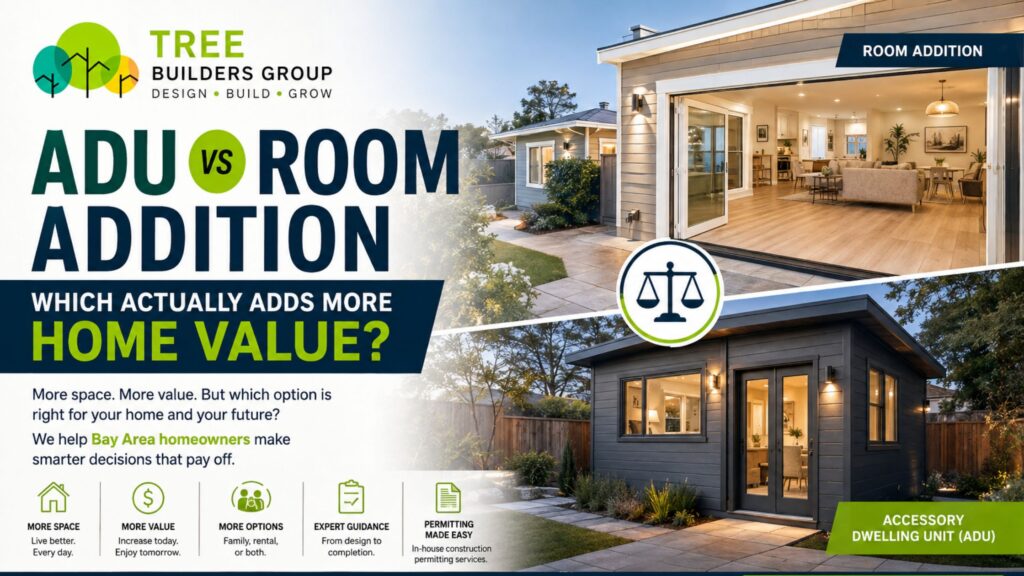
Homeowners from all around the Bay Area eventually find themselves in a situation where they require more space than what they currently have. There are two options: constructing an additional accessory dwelling unit or adding on to the existing structure. Most of the time, a room addition increases the resale value of the property faster compared to the former.
At Tree Builders Group, we’ve helped countless families throughout Northern California make the right decision. If you’re in a dilemma, this is what will pay off for you.
Ready to Add More Space to Your Bay Area Home?
What Is the Fundamental Distinction Between an ADU and a Room Addition?
A room addition expands the existing house. It has your roofline and foundation and may even share utility connections with you, adding additional bedrooms, bathrooms, or family rooms to your home.
ADU is quite the opposite. It is a fully independent unit that has its own kitchen, bathroom, and entrance, and is not limited to being located just next to your house; it can be placed right in your yard. It is the very independency that makes an ADU a great source of income or accommodation for your relatives.
Which Choice Boosts Your Resale Value More?
In appraisals, the extra square footage that fits in seamlessly with the structure of your house tends to carry greater importance, which is why the room addition service that is properly constructed usually finds itself making an appearance in comparables. The extra large living space in your home would definitely appeal to potential buyers as well.
It does not imply that an addition will always score higher. It just means that the value will be more predictable and quicker to appear because the addition integrates into the total size of the property.
What Does an ADU Bring to the Table on a Long-Term Basis?
An ADU is a long-term investment. Rather than a one-off increase in space, it provides an avenue for monthly income, a home for aging parents, or an independent arrangement for adult children that may not be ready to leave the nest just yet.
The changes made in California regarding housing rules have made permitting an ADU much simpler than a few years back, and this trend has increased the demand among home buyers for properties that come equipped with an ADU. For homeowners who plan ahead by several years, this demand curve is just as important as the current-day appraised value.
What Do Bay Area Buyers Really Want?
It may vary from neighborhood to neighborhood, but one thing buyers are always looking for is space. When buying a room addition in the Bay Area for their family, they are willing to sacrifice an independent unit for an additional bedroom or larger kitchen. This choice is especially applicable when they are not going to rent the property but will be using it personally.
If it comes to investors or extended families, then it’s another story altogether because they look for properties that have the potential of adding an accessory dwelling unit.
What Can You Anticipate With Regard to Cost, Timeline, and Permitting?
While both options are legitimate, there is no way that they operate on the same level. Here’s what to anticipate with regard to cost and timeline:
- Cost: In most cases, an addition will be cheaper than an ADU due to shared utilities and structures.
- Timeline: Addition projects tend to go from design to construction phase more quickly since they do not need to create a completely new kitchen and bathroom.
- Permitting: ADUs go through a more rigorous permitting process due to their occupancy and utility issues.
- Disturbance: While an addition is connected to your home, the work on an ADU is done far from you.
Whatever decision you make, it will be important for you to choose a company that provides construction permitting services in-house.
How Should You Pick the Right Room Addition Contractor?
While licensing and insurance are essential, it’s only the beginning of what you should consider. Having a contractor who will handle permitting, structure, and finish carpentry in one package will help you avoid dealing with three different contractors for your project.
You can ask for samples of their past projects that they’ve done in your exact neighborhood, not just examples in general. Experience in your neighborhood is important since conditions such as the soil, HOA policies, and permitting process vary block-by-block in the Bay Area.
Should You Look for an ADU Specialist Instead?
Not every addition contractor does not necessarily have the same level of comfort when it comes to creating an attached structure. When you are considering building an ADU, find yourself a builder with practical knowledge of accessory dwelling units in the Bay Area, because there are a lot of things that make ADUs unique from regular additions in terms of codes, utilities, and occupancy laws.
The best part about it is that you do not always have to decide between the two kinds of specialists. There are many people who opt for the services of a single room addition contractor who will be able to compare the two projects.
Turn Your Home Expansion Plans Into Reality
The Smarter Way to Invest in Your Bay Area Property
No one choice is definitively better than the other. A room addition will likely prove most profitable when it comes time to resell your home, but building an ADU creates value and earns extra money in the long term. It all depends on whether you’re trying to maximize your returns in the next sale or in the coming decade that you’ll be in your property.
Tree Builders Group has a lot of experience dealing with just this kind of decision for our clients across the entire San Francisco Bay Area from start to finish. We have the expertise to do room additions in Bay Area properties and ADU construction all from one organization, even offering financing plans for those who aren’t willing to put all the money upfront.
Do you want to find out which project is right for you? Schedule a free consultation today with Tree Builders Group to get your realistic price and timeframe.
FAQs
Is there an increase in property tax when a new room is added to the house?
Yes, but not instantly and not as much as homeowners expect. The value of new construction will be assessed only, not the whole house value by your assessor’s office, meaning that it will be proportional to the square footage added.
Is it possible to convert the additional room into a rented area in the future?
It is possible, but it will depend on the way the room was initially built. If you are planning to convert the room into something else later on, it is better to consult your contractor about the possibility of providing the room with an independent entrance or rough-in plumbing.
Why does it take more time to get the permit for an ADU compared to building an additional room building?
It is because there should be more items verified in the case of an ADU: its utility connections, occupancies, etc. A regular room building just extends the existing infrastructure, which is already approved.
Will building an ADU change my homeowner's insurance differently than an addition would?
Both of these projects will involve changes to your dwelling insurance coverage, but an ADU being rented out may need to have an endorsement added for landlords or rental properties that a regular addition would not.
If I can't pay for the full project upfront, what are my realistic financing options?
The most typical methods for both types of projects include home equity loans, cash-out refinances, and loans for specific renovations. There are also some contractor companies that offer in-house financing plans for their projects.